Designing for Florida Light: Colors and Materials That Stay Beautiful in Orlando
Florida light is generous, bright, and honest. It flatters the right palette and exposes the wrong one within a single afternoon. Here is how I choose colors and materials for Central Florida homes so they look as good in year five as they did on reveal day.
BY SALWA OMAR · OCTOBER 17, 2026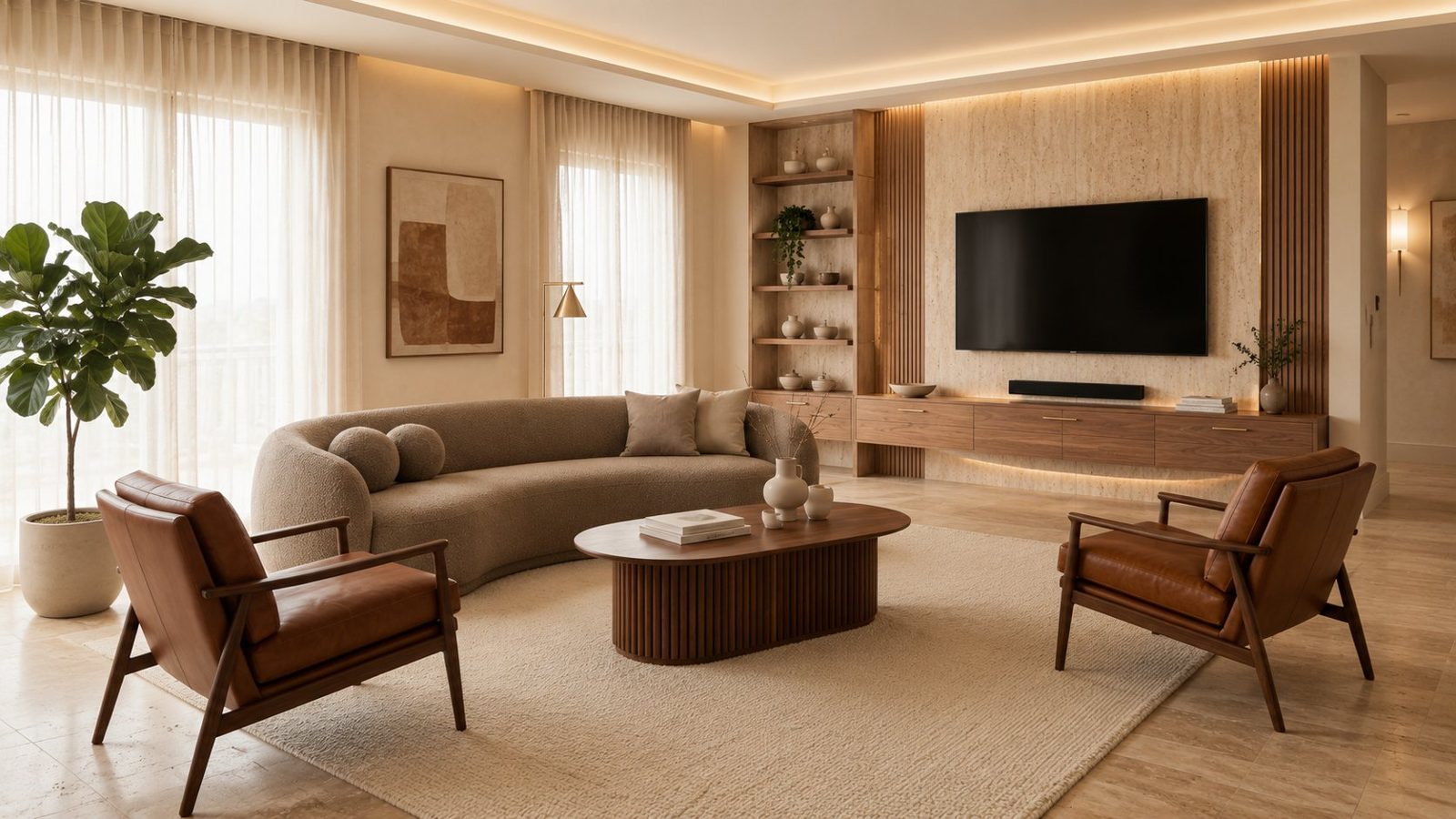
1. Test color where it will actually live
A paint chip under showroom lighting tells you very little about a west-facing living room in Winter Park at 5 p.m. Strong sun pushes cool whites toward blue and makes saturated colors look louder than they read on the card. I always paint large samples — at least two feet square — on more than one wall, and we look at them in the morning, at midday, and after dark under the room’s own lighting before anything is approved.
For most Florida homes I lean toward warm, softened neutrals with a hint of earth — ivory, oat, mushroom, soft clay — rather than stark white. They absorb glare, keep the room calm, and make wood, brass and stone glow instead of fighting the light.
2. Choose fabrics that can handle the sun
Direct sun fades natural fibers faster than most people expect, especially near large sliders and lanai doors. For sofas and chairs that sit in the light, I specify performance upholstery: solution-dyed fabrics, where the color goes all the way through the fiber, hold up far better than surface-dyed ones. They now come in beautiful bouclés, linens and velvets, so durability no longer means giving up texture.
Window treatments do the rest of the work. Layering sheer linen with a lined drapery or a discreet solar shade softens glare, protects floors and furniture, and still lets the room feel open.
3. Pick natural materials that welcome humidity
Humidity is the second half of the Florida brief. Solid wood moves as moisture changes, so for floors I often recommend high-quality engineered wood, which gives the look of wide oak or walnut planks with more stability. Natural stones like travertine and marble are wonderful here — cool underfoot and timeless — but they need to be properly sealed and resealed on a schedule. In wet areas I am careful with grout, ventilation and finishes that will not trap moisture.
4. Plan the light for after sunset
A room designed only for daylight can feel flat at night. I plan lighting in three layers: ambient light for the whole space, task light where you read, cook and get ready, and accent light that brings out art, texture and architecture. For living spaces I usually keep the color temperature warm — around 2700K to 3000K — with dimmers on every layer, so the home can move from bright and practical to soft and intimate in the evening.
5. Let the palette carry from room to room
Florida homes are often open-plan, so materials are seen together from many angles. I build one disciplined palette — two or three woods and metals, one stone family, a short list of colors — and repeat it with variation throughout the house. That is what makes a home feel collected and calm rather than decorated room by room.
Every one of these decisions is visualized in photorealistic 3D before a single piece is ordered, so you can see how the light falls on your actual rooms first.
Salwa Omar is the principal designer of Salwa Omar Interiors, a luxury residential studio in Orlando, Florida, with 20+ years of practice.